| |||||||||||||||||||||||||||||||||||||||||||||||||||||||||
 | |||||||||||||||||||||||||||||||||||||||||||||||||||||||||
|
login
|
 |
 |
 |
||
 |
|
 |
||
 |
 |
 |

|
|
|
|
THE FOOD CHALLENGE Wherever you live in the world, you will have noticed your food bills going up lately! There are several reasons for that, many of them related to the finite and soon reducing supply of oil coupled with huge and rising demand for oil by the rapidly industrialising Asian economies particularly China and indeed India itself. The resultant massive oil price increases have encouraged use of great tracts of land for the production of alternatives such as biofuels rather than food. And of course the oil inputs to the production and transport of food go towards increasing its price, as does the increasing demand for food products from these developing economies. And there's a lot more to come. It has been estimated that if everyone on the planet was to use food at the rate that the USA does, we would need two planets to produce enough of it.
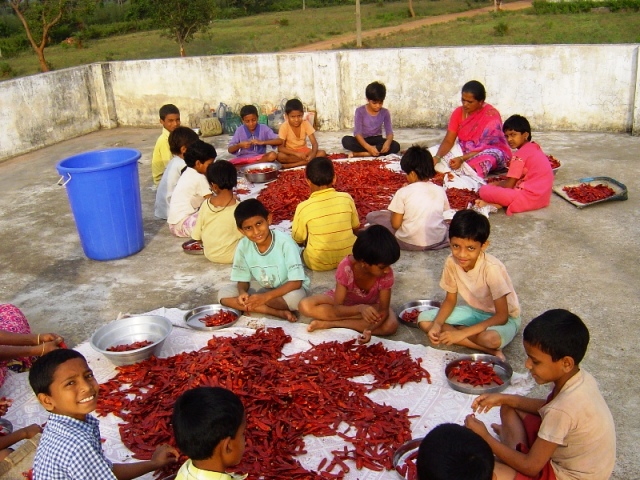
Some of our children at Shantidhara Hostel processing red chillies...
The growing demand for protein around the world means that more and more cereal production is going into producing feed for livestock rather than people. The world's financial markets don't help much as speculators invest in commodities such as wheat futures, driving prices upwards. And there are other pressures as huge trading and international retail operations invest their time and efforts in maximising profits for their shareholders. Protectionist trading policies which retard the ability of developing countries to export their products also retard their ability to produce food for their own people.
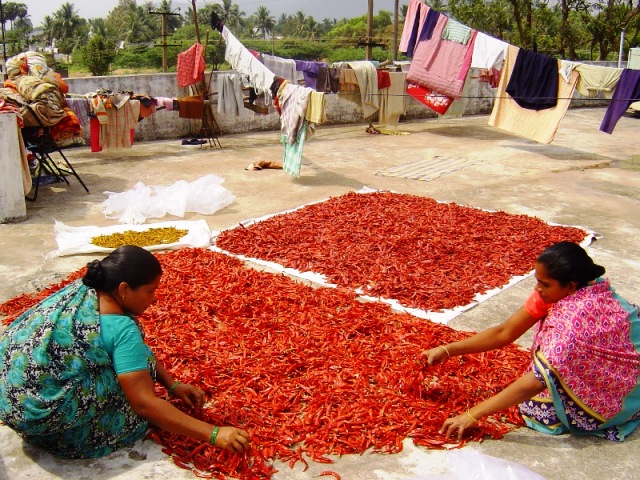
Staff sun drying red chillies and turmeric roots...
If you live in the West, or in a well to do part of society anywhere, you're probably grumbling at the size of the rising shopping bill but still coping okay! However, if you live at the bottom of the pyramid, these price pressures are just as real except that you've no money and it's rapidly becoming a matter of life or death. This is a serious global challenge and while the United Nations can have its global conferences of the great and the good to address things at a macro level, we in operations such as Shantidhara can't afford to hang about. Fortunately, there's a lot we can do to help ourseves. Our hostel children need a good staple diet and, with the advantage of our own farm, we can provide for most of their food security needs on a sustainable basis, without being held hostage to ballooning market prices. We need to organise for the long term.
|
|
|
|
|